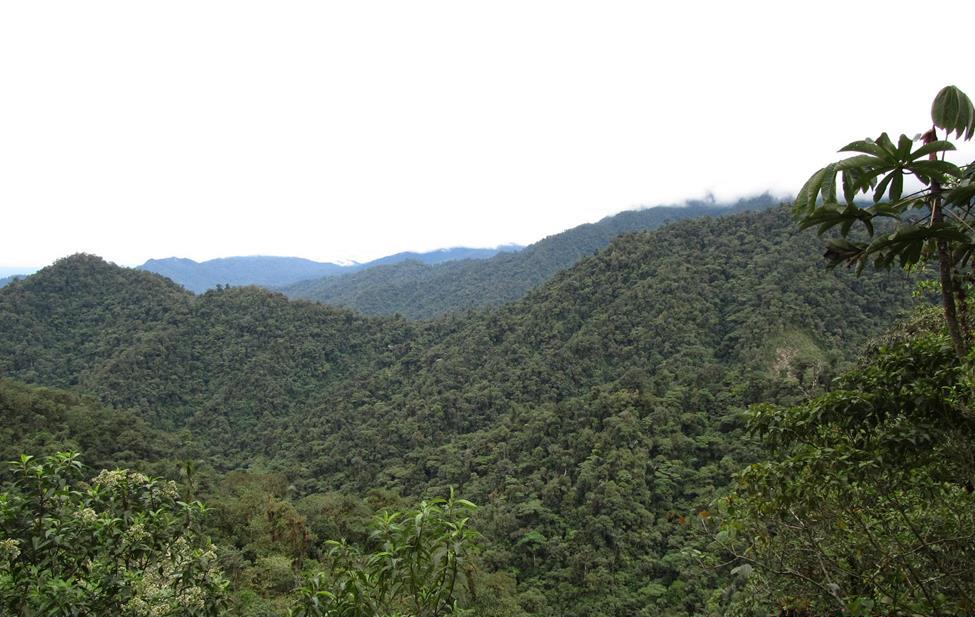
--- Contributed by Adam Grasmick
Saturday, August 3, 2013
Adam Grasmick presents his Research Work in the 21st Annual McNair Scholars Research Symposium
Friday, April 12, 2013
Eighth graders measure and analyze the spectral reflection pattern of live and dead plant leaves
Fifty-seven, eighth grade students at Laramie Junior High School learned how earth surface objects interact in the visible and invisible regions of the electromagnetic spectrum (light) and measured and analyzed spectral properties of live and dead plant leaves.
Describing the value of this hands-on exercise, Mr. Ron Whitman, eighth grade physical sciences teacher, said, “[M]y approach to teaching science has always been having the students experience the practical applications of science. Ramesh Sivanpillai from the University of Wyoming in Laramie has been presenting information about remote sensing to my classes for several years. My 8th grade physical science class is an introductory class for physics and chemistry. One of the topics discussed is electromagnetic waves. Ramesh presented information to my classes for two, 90 minutes sessions. Ramesh introduces the electromagnetic spectrum with a very informative power point presentation. Most of the two 90 minute sessions the students get to use … spectrometers to measure and eventually calculate the percent reflectance of particular wavelengths emitted by dead vs. living deciduous leaves and dead vs. living coniferous needles. This year the students got to plot their data on a computer spreadsheet and have the program calculate and graph the data. Wow! This was awesome. Students compared their own data and other student’s data and discussed what was similar, different and reasons for error. In my assessment of the two 90 minute sessions my students continue to be excited about remote sensing and the tools, both simple and complex, that are able to detect different frequencies of the electromagnetic spectrum.”
Students’ feedback highlighted different aspects of this lecture and hands-on exercise (NOTE: for privacy, students are identified by their initials):
![]() |
| Students in the first batch are collecting spectral data (Apr 2, 2013) |
![]() |
| Students in one of the three classes are entering their data in spreadsheet to calculate and graph reflectance values of live and dead leaves (Apr 10, 2013) |
![]() |
| Verifying that all numbers were entered correctly (Class period 3: Apr 10, 2013) |
“This experiment helped to understand chapter 6 by showing how the colors change…” - DG
“This helped me understand color more. The effects of man can affect earth so much.” – CM
“It helped me understand that not all light is visible to us as humans. It helped me understand that nothing has a true color it is just what color we see it in, how our eyes work.” - HS
“This hands-on exercise helped me understand colors and the interaction of radiation and it was fun.”- NM
“This exercise taught me that different colors reflect different amounts of light, and dead and live deciduous and coniferous trees do too.” – MS
“This hands-on exercise helped me to understand the interaction of electromagnetic radiation better because we had the chance to look at real results and also examples. I learned a lot.” – LC
“This activity helped me to understand how things may differ in a way we may not be able to understand at first glance. I also learned how to use Excel.” – BC
“…I learned about all the actual colors of things like leaves and flowers. This experiment was really enjoyable.” – IW
“This helped because after doing the hands-on activities and seeing them in the graph compared to everyone else, I saw and understood how light reflects and how the basics of remote sensing works.” – TN
“This hands-on exercise helped me to understand the interaction of electromagnetic radiation by showing me that it is used in everyday life by a lot of different careers. It was interested and showed me science is more than formulas.” – AMThis event was conducted on April 2, 3, 9 and 10 as part of AmericaView’s Earth Observation Day activities aimed at introducing teachers and students to remote sensing science and applications.
Monday, March 11, 2013
Botany graduate student, David Reed, wins the prestigious Outstanding Student Paper Award at the 2012 AGU annual meeting
David Reed, a PhD student in Brent Ewers’ Plant Physiological Ecology lab, won an Outstanding Student Paper Award (OSPA) for his poster titled "Contrasting ecosystem drivers of mass and energy fluxes at upper and lower elevation sagebrush steppe sites" presented at the American Geophysical Union (AGU) 2012 annual meeting in San Francisco.
AGU awards OSPAs “to promote, recognize and reward undergraduate, Master’s and PhD students for quality research in the geophysical sciences.” These awards are a “great honor for young scientists at the beginning of their careers.” The AGU annual meeting is one of the largest meetings with more 20,000 scientists and students in attendance and only the 3-5% of the student presenters in each session is awarded an OSPA.
David received his award in the session "Climatic Controls on Net Ecosystem Exchange." Dr. Ewers (Botany Associate Professor), Dr. Pendall (Botany Associate Professor), and Dr. Kwon (former Botany Postdoctoral Research Associate in Ewers lab) were co-authors of this poster.
To learn more about the research conducted by Brent Ewers and his students, please visit the lab's website.
AGU awards OSPAs “to promote, recognize and reward undergraduate, Master’s and PhD students for quality research in the geophysical sciences.” These awards are a “great honor for young scientists at the beginning of their careers.” The AGU annual meeting is one of the largest meetings with more 20,000 scientists and students in attendance and only the 3-5% of the student presenters in each session is awarded an OSPA.
David received his award in the session "Climatic Controls on Net Ecosystem Exchange." Dr. Ewers (Botany Associate Professor), Dr. Pendall (Botany Associate Professor), and Dr. Kwon (former Botany Postdoctoral Research Associate in Ewers lab) were co-authors of this poster.
To learn more about the research conducted by Brent Ewers and his students, please visit the lab's website.
Tuesday, January 29, 2013
Laramie middle- and high-school students’ work showcased in 2012 AmericaView Fall Technical Meeting
![]() |
| Posters prepared by Laramie K-12 students on display in the main atrium of the USGS EROS Data Center, Sioux Falls, SD |
Three K-12 students from Laramie had a busy summer measuring surface temperatures of natural and man-made features and the spectral reflectance values of leaves. These research activities were part of WyomingView's Earth Observation Day activities. Their findings were showcased in the 2012 AmericaView Fall Technical Meeting in Sioux Falls, SD.
Arundathi Nair, an 5th grader in the Spring Creek Elementary School explored whether man-made surfaces (roads and concrete pavement) were hotter than a natural surface (grass lawn). Her measurements taken at 10 am, 1 pm, and 6 pm revealed that temperature of all surfaces rose to their maximum values at 1 pm. The temperature of the road was higher than that of concrete pavement. Grass surface had the lowest temperature, which led her to conclude that man-made surfaces were hotter than natural surfaces.
![]() |
| Tire mulch mat installed in this park recorded an average temperature of 65°C (150 °F) at noon, while the average temperature of the grass lawn and concrete pavement were 34°C and 25°C respectively |
![]() |
| Changes in the Normalized Difference Vegetation Index values of aspen and cottonwood leaves sampled in Laramie, WY |
Mrudhula Baskaran a 10th grader at Laramie High School monitored spectral reflectance changes in aspen and cottonwood leaves. Using an Alta II Reflectance Spectrometer she measured the spectral reflectance values of 10 leaves from each tree and computed the Normalized Difference Vegetation Index (NDVI). She repeated these experiments on the 24th August, and the 2nd and 9th of September, 2012. While the NDVI values of aspen trees declined during this period, the cottonwood trees showed no change. This study helped her to see the relationship between the changes in leaf color and reflectance.
Acknowledgements:
Thanks to Dr. Alan Buss, University of Wyoming, for loaning the infrared thermometer and Alta Spectroradiometer, and Dr. Kevin Czajkowski, University of Toledo, for providing the infrared thermometer used in these studies.Monday, December 24, 2012
UW, CSU Research: Microbes Accelerate Soil Carbon Loss
Dr. Elise Pendall and her team of UW and CSU researchers publish their findings in Ecology Letters.
Read more from the UW press release: http://www.uwyo.edu/uw/news/2012/11/uw,-csu-research-microbes-accelerate-soil-carbon-loss.html
Journal's website: http://onlinelibrary.wiley.com/doi/10.1111/ele.12034/abstract
To learn more about Dr. Pendall's research and her lab, please visit her website at https://sites.google.com/site/pendalllab/
Read more from the UW press release: http://www.uwyo.edu/uw/news/2012/11/uw,-csu-research-microbes-accelerate-soil-carbon-loss.html
Journal's website: http://onlinelibrary.wiley.com/doi/10.1111/ele.12034/abstract
To learn more about Dr. Pendall's research and her lab, please visit her website at https://sites.google.com/site/pendalllab/
Friday, August 31, 2012
Prof. Stephen Jackson to Lead Southwest Climate Science Center
"Dr. Stephen Jackson has been selected as the center director for the U.S.
Department of the Interior Southwest Climate Science Center, headquartered at
the University of Arizona in Tucson." - USGS
Read the full USGS press release in their digital newsroom
Contact Information:
U.S. Department of the Interior, U.S. Geological Survey
Office of Communications and Publishing
12201 Sunrise Valley Dr, MS 119
Reston, VA 20192
Barbara Wilcox & Douglas Beard
Read the full USGS press release in their digital newsroom
Contact Information:
U.S. Department of the Interior, U.S. Geological Survey
Office of Communications and Publishing
12201 Sunrise Valley Dr, MS 119
Reston, VA 20192
Barbara Wilcox & Douglas Beard
Monday, August 27, 2012
Orchids
Orchids (photo by Ken Driese)
[Click image to view larger]
Some of you may enjoy this orchid photograph. Photographed using a bright backlight in combination with front-light from an overhead strobe. Can any of you identify the species?
Tuesday, May 29, 2012
New Remote Sensing Minor
A Landsat 5 Thematic Mapper (TM) image of the Wind River Mountains.
(click image to view larger)
The Botany Department is excited to offer a new undergraduate Minor inRemote Sensing!
You may not know that Botany has been central in remote
sensing education at UW for over a decade, since we began teaching courses on
the applications of satellite imagery and aerial photography for plant
studies. With increased interest from UW
students, we’ve steadily increased the number of remote sensing courses we
offer, and now students can be recognized on their diplomas for coursework
exploring this increasingly marketable science.
Courses for the Minor cover basic and advanced remote sensing techniques,
specialized applications of remote sensing, hands-on digital image analysis,
other geospatial tools, like GIS, and fundamental plant ecology, which can contribute to image analysis.
Find out more about the new Minor on the Botany Website or
by contacting the Botany Department.
Monday, April 23, 2012
Introducing Laramie Junior High School Students to Remote Sensing Concepts and Applications
One hundred and fourteen students in Ron Whitman’s eight grade physical and seventh grade biological sciences classes (three class periods each on April 4th and 5th, 2012) learned how remotely sensed images are acquired in different regions of the electromagnetic radiation (EMR) and their uses for monitoring earth surface features such as trees, crops, bare ground, water, roads, buildings, etc.
Botany faculty member and WyomingView
coordinator Ramesh Sivanpillai described the differences in the interaction of earth
surface features with EMR, and how those interactions result in their appearances
or colors. Students learned the uses of images
collected by satellites and airplanes for monitoring the effects of beetle
attacks on pine trees, deforestation, crop growth, and changes in the surface
areas of lakes and reservoirs. Mr.
Whitman commented that the presentation helped “students understand the use of
different electromagnetic waves for practical applications.”
In the lab, students working in
teams used ALTA ™ Spectrometers to measure spectral reflectance in 10 different
regions of EMR. Next, they calculated percent
reflectance values, which were then plotted against wavelength to generate the spectral
signature for each leaf.
Analyses of
these signatures led the students to conclude that the spectral signature of
each leaf was distinct.
Hands-on lab component for measuring and calculating “percent reflectance of the four types of leaves at different wavelengths, actively engaged the students the entire lab time” Mr. Whitman said. Sivanpillai explained the differences in the spectral signatures of different earth surface features and remote sensing scientists rely on these signatures for mapping those features.
This educational outreach activity
was conducted as part of AmericaView’s Earth Observation Day activities aimed
at introducing teachers and students to remote sensing science and applications.
Labels:
K-12,
Outreach,
remote sensing
Location:
Laramie, WY, USA
Wednesday, April 4, 2012
Extraordinary Discovery of an Ice Age Ecosystem near Snowmass Village, Colorado
Dane Miller
Graduate Student MS, UW Botany Department
On, October 14, 2010, Jessie Steel, a machine operator for an excavation company, unearthed bones of a Columbian Mammoth in a reservoir near Snowmass Village, Colorado. The news of the mammoth discovery captivated the locals in the ski resort towns of Snowmass and nearby Aspen. The buzz of the area shifted seemingly overnight from gossip about celebrities, luxury homes, and skiing to talk of an unimaginable world filled with huge animals such as mammoths, mastodons, and sloths that roamed the same landscape. Within days after the initial mammoth bones were unearthed, construction workers continued to find more bones including tusks, limb bones, vertebrae, jaws, and teeth of ice age animals at an astonishing rate. Reports trickled out from the construction site about the unusual preservation of the bones and plant material found in nearly pristine condition—remarkably the plant material still contained its green waxy cuticle.
Denver Post article: "Snowmass tally: 10 mastodons, 4 mammoths, one "once-in-a-lifetime" find"
![]() |
| Dane Miller at the excavation site (Photo by Mr. Rick Wicker, photographer, Denver Museum of Nature and Science. Used with permission from DMNS) |
The news of the discovery rapidly spread across Colorado like wildfire. The Denver Museum of Nature and Science (DMNS) stepped in as the lead research group behind the leadership of Kirk Johnson and Ian Miller (curators of paleontology at the DMNS). Ian, who happens to be my older brother, immediately called me up and told me to clear my calendar for November. He said “Dane, you better start packing, next week we’re going to be excavating mammoths and mastodons.” My brother always seems to call me up when there is either a cool fossil site to excavate or going skiing—he always wants his brothers around. I have worked with my brother for more than 10 years collecting fossil plants in Washington, Wyoming, Utah, and Colorado. Prior to the Snowmass dig I had worked at the DMNS as a research assistant and the Smithsonian Institution National Museum of Natural History as a lab manager/curatorial assistant, so it wasn’t as if I was jumping into field work for the first time. I was asked to do several duties on the Snowmass site beyond just collecting bones and plant material: I led volunteers, assisted research scientists, and labeled specimens. My most dangerous job was running alongside the blade of massive D6 bulldozers moving at nearly full speed as I looked for bones coming out of the mud.
Denver Museum of Nature & Science: Crews race against winter weather ...
Snowmass Sun article: Family affair ...
My first full day on site blew me away. The site was nothing I had imagined or was really prepared for: working alongside massive heavy machinery, running through three to four feet of cold mud, and tripping over fossils literally everywhere. With every pass of the bulldozers, more bones were unearthed as the site shifted from a couple animals to dozens of animals. The site truly was an emergency room, treating the critically injured (those that were badly damaged by the heavy machinery) first, and triaging the rest. No one had any idea how large this story would become, or knew how it would change Snowmass Village, Colorado. We did know we were a part of history, something truly special.
Colorado State Senator's Press Conference will unveil ...
The find that is etched in my mind forever is a mammoth jaw I discovered. I had come around the side of the portapotty, an area the Museum had originally deemed to be void of fossils in the upper clay layer. I was curious to see what the excavator was digging when I noticed a large mammoth jaw sticking out of the clay. I immediately had the operator stop what he was doing, and ran as fast as I could to get a vertebrate paleontologist to verify my discovery. My brother Ian insists that I was possessed by mastodon spirits. This is his only explanation why I was able to find so many bones. Who knows, maybe I was!
Colorado State Senator's Press Conference will unveil ...
The find that is etched in my mind forever is a mammoth jaw I discovered. I had come around the side of the portapotty, an area the Museum had originally deemed to be void of fossils in the upper clay layer. I was curious to see what the excavator was digging when I noticed a large mammoth jaw sticking out of the clay. I immediately had the operator stop what he was doing, and ran as fast as I could to get a vertebrate paleontologist to verify my discovery. My brother Ian insists that I was possessed by mastodon spirits. This is his only explanation why I was able to find so many bones. Who knows, maybe I was!
In the spring of 2011, the Denver Museum organized a highly structured field operation to hand dig the bones where the toe of the dam for new reservoir would eventually be placed. In eight weeks of digging, and with the help of nearly 200 Museum volunteers, we dug up nearly 6,000 bones. I had the privilege of leading a team of 10-12 volunteers over the eight weeks, digging, mapping, and collecting bones and plant material. The Museum also brought in 40 scientists who specialize in Pleistocene and Quaternary time to begin bringing all the science together. By mid-spring a team of scientists from the US Geological Survey (USGS) in Lakewood, Colorado, were able to determine radiocarbon dates from a piece of wood as old as 39,500 years. Other dating techniques have constrained the age of the lake between 130,000 to 39,500 years old.
Why is this site so special?
- Exceptional preservation: bones, plant material, and cones still intact as if they were deposited yesterday, which is extremely rare in paleontology.
- Diversity: Complete Pleistocene ecosystem: ~ 40 vertebrates and ~ 20 plant species.
- Elevation: Paleontological sites at high elevation are very rare.
- Time: The site is between 130,000 and 40,000 years old. More than 90,000 years of Pleistocene history are captured in this reservoir, providing a unique opportunity to explore high elevation Rocky Mountains ecosystems.
- aDNA: This site may be able to push the limits of aDNA further than ever because of the exceptional preservation.
As a graduate student in the Botany Department at University of Wyoming pursuing a Masters in Botany with Dr. Stephen Jackson, I've been fortunate enough to continue to work on the Snowmass project. My Master’s thesis is focused on the conifer cones and needles collected at the Snowmass site. I will be applying various morphometric techniques, taxonomy, and aDNA molecular analysis to help add to our understanding of Pleistocene conifer forests in the Rocky Mountains.
Additional links:
New York Times: Pleistocene Treasures, at a Breakneck Pace (July 4, 2011)
NOVA (PBS): Ice Age Death Trap (Dec 15, 2011)
New York Times: Pleistocene Treasures, at a Breakneck Pace (July 4, 2011)
NOVA (PBS): Ice Age Death Trap (Dec 15, 2011)
People's Press: Digging Snowmastodon: Discovering an ice age world in the Colorado Rockies (Book)
Dr. Steve Jackson's Quaternary Plant Ecology Laboratory webpage
Labels:
Grad Students,
Pleistocene
Location:
Snowmass, CO, USA
Subscribe to:
Posts (Atom)


